
Last updated November 18, 2026








Free written scope consultation - allowances, timeline, and change-order rules on paper before a single trade is scheduled
General Contractor Troubleshooting: Common Problems and How to Fix Them
Here’s the part few homeowners expect: the number one complaint filed against contractors in Nevada isn’t crooked work or a leaky shower pan. It’s abandonment – a contractor who takes a deposit and disappears mid-project. And there’s a frustrating gap on the other side of that statistic. The Federal Trade Commission has noted that only about 5% of consumers who report an ongoing problem to a consumer protection agency end up filing formal legal action, which tells us most people either walk away or resolve things informally. Homeowners who build a real paper trail early and follow the right steps recover far more than those who wait and hope. In this guide, we’ll draw a clear line between the problems you can fix with a conversation and the ones that call for a complaint filing, a lien waiver, or a lawyer. We’ll cover Henderson-specific timelines and the exact paper trail to build in the first 48 hours.
Quick Answer
Most general contractor problems fall into one of three buckets: workmanship defects (the contractor’s liability), material failures (the manufacturer’s warranty), or communication breakdowns (yours to resolve directly). Figure out which bucket you’re in before you accuse anyone of anything. Then build a written record, request a written response, and only escalate to the Nevada State Contractors Board if the contractor stops responding or refuses to correct a covered defect. A quick conversation resolves most issues; a well-timed NSCB complaint resolves the rest.
Styles & brands we work with
- Kitchen remodeling
- Bathroom remodeling
- Home additions & ADU
- Roofing
- Windows & doors
- Driveway & pavers
- Fence
Table of Contents
- Workmanship vs. Material Failure: Who’s Actually Responsible?
- The First 48 Hours: Building Your Paper Trail
- Nevada Mechanic’s Lien Law and the 31-Day Notice Window
- Using the NSCB Complaint Portal as Leverage
- Change-Order Disputes vs. Scope Creep You Approved
- What to Do When Your Contractor Goes Silent
- Preventing These Problems Before They Start
Workmanship vs. Material Failure: Who’s Actually Responsible?
Before you make accusations, you have to know what kind of problem you’re looking at. These two categories have completely different owners, timelines, and resolution paths – and mixing them up wastes months.
Workmanship failure means the product was fine, but it wasn’t installed correctly. Examples we’ve seen in Henderson homes: a tile shower with no waterproofing membrane behind it, causing mold at the baseboard within eight months. A cabinet run installed out of level so the doors rack and stick. A roof flashing detail done wrong, sending water down an interior wall. These are the contractor’s responsibility, full stop.
Material failure means the installation was correct, but the product itself is defective. A window seal fails and fogs between the panes on a PGT or CGI unit. A cabinet door delaminates. A composite deck board cracks within a year of install. These are covered by the manufacturer’s warranty, not the installer’s workmanship warranty – though a good contractor will still walk you through the claim.
Here’s the diagnostic question: Is the failure in a pattern that follows how the product was installed, or does the failure appear at random across multiple units?
- Pattern follows install (i.e., one corner of the shower always wet): likely workmanship.
- Failure shows up in one unit among a dozen identical ones installed the same way: likely a material defect.
- Failure repeats in every unit installed by the same crew: workmanship, and probably a systematic technique issue.
Get this diagnosis right before your first email. If you lead with “your workmanship is garbage” and it turns out to be a manufacturing defect, you’ve burned the goodwill you’ll need to get the claim filed. If you lead with a warranty claim and it’s really a workmanship issue, you’ll spend weeks chasing a manufacturer who doesn’t owe you anything.
For a broader look at how we approach project accountability across kitchens and baths, see our General Contractor in Henderson overview.
The First 48 Hours: Building Your Paper Trail
The first two days after a problem surfaces are worth more than the next two months. This is where the outcome of most disputes is decided – not by the facts, but by whether the facts are documented.
Do these six things in this order:
- Photograph everything with timestamps. Wide shots showing the room, then close-ups of the defect, then a shot showing the two together. Take more photos than you think you’ll need. Video helps for anything moving, leaking, or sagging.
- Write a plainspoken summary email describing what you see, when you first noticed it, and what you want. Send it to your contractor’s written contact (the one on the contract). Do not text. Text threads get deleted and screenshots look convenient but incomplete.
- Locate the contract and any change orders. Read the workmanship warranty section and the change order language word for word. Write down the exact dates these documents were signed.
- Photograph the worksite as-is. Do not demo or repair anything until you’ve documented it. If the issue is a water leak, shut off supply – that’s a safety step, not a repair step – but leave the evidence in place.
- Check your permit status. Log into the City of Henderson’s online permit portal or call the building department and confirm every inspection that was supposed to happen actually did. Unpermitted work changes the entire dispute.
- Send a follow-up text or voicemail summarizing the email. This locks in a record that you attempted contact on a specific date. The follow-up is polite but a moment-by-moment record matters more than tone.
Save these in a dedicated folder – not in your phone’s camera roll. If you later need to file an NSCB complaint or defend against a lien, this folder becomes your exhibit list.
We’ve seen Henderson homeowners go straight to court over a $3,000 issue and lose because their written record was a text thread from an unknown number. Save yourself the trouble and build the folder.
Nevada Mechanic’s Lien Law and the 31-Day Notice Window
This is the single most misunderstood part of homeowner-contractor disputes, and getting it wrong can cost you your title. So read this section twice.
Nevada mechanic’s lien law allows contractors, subcontractors, and material suppliers to place a lien against your property if they don’t get paid – even if you already paid your general contractor. The lien attaches to the property, not the person. If a subcontractor on your job isn’t paid by the GC, that sub can file a lien against your home.
The 31-day rule: subcontractors and material suppliers who did not have a direct contract with you must send you a preliminary notice within 31 days of first furnishing labor or materials to the project. If they miss that window, their lien rights are significantly weakened. Your job is to keep every preliminary notice you receive in a dedicated file – not the trash. They look like junk mail. They are not.
Practical steps:
- Ask your GC before work starts whether they’ll provide conditional lien waivers from every sub and supplier as progress payments are made. A reputable GC will have this as standard practice.
- When you make your final payment, request unconditional final lien waivers from the GC and all major subs and suppliers. Hold your last payment until they’re in hand.
- If you receive a preliminary notice you don’t recognize, don’t panic and don’t ignore it. Note the date received and keep it. It’s a legal notice, not a scam.
- Get lien releases in writing on every draw. Even on a $5,000 job. Especially on a $5,000 job.
Nevada’s specific requirements on lien filing deadlines and notice content vary depending on whether the project is residential or commercial and who’s filing. When in doubt, get a construction attorney’s eye on the paperwork – a $400 consult is cheaper than a lien on your house.
For bathroom work specifically, our Bathroom Remodeling in Henderson page describes how we handle lien waivers and payment schedules as part of the project file.
Using the NSCB Complaint Portal as Leverage
Here’s the counterintuitive part: the threat of an NSCB complaint is often more useful than the complaint itself. The complaint is a real escalation. But most problems resolve before that point – if the contractor knows you understand the process and are prepared to use it.
The Nevada State Contractors Board oversees licensing for contractors working in Nevada. Their complaint process is public, slow (expect weeks to months, not days), and outcomes range from a mediated agreement to a formal disciplinary action against the contractor’s license. It’s not a magic wand. But a licensed contractor who receives a written notice from a homeowner that a complaint is pending has real incentive to resolve things quickly.
Order of escalation:
- Direct written notice – a calm email stating the specific defect, the resolution you want, and a deadline (7 to 10 business days is fair).
- Written notice of intent to file – an email that says, in plain language, “If this isn’t resolved by [date], I will file a complaint with the Nevada State Contractors Board.” Send this only after step one fails. Mean it when you send it.
- Actual NSCB complaint – filed at the NSCB’s public online portal. You’ll need the contract, your paper trail, photos, and a written narrative. Do not exaggerate.
- Civil remedies – small claims court (Nevada’s small claims limit is $10,000) or district court for larger amounts. Usually needs an attorney for the larger cases.
Two warnings. First, filing an NSCB complaint before you’ve tried direct resolution can slow the process down – the board will ask why you didn’t go direct first. Second, a complaint is a public record. If you plan to sell, it’ll surface in a title search or buyer’s due diligence. Use it as leverage deliberately, not as a first strike.
For general contracting questions in Henderson specifically, our Mason Remodeling Co Henderson home page describes how we handle project accountability and written pricing before work begins.
Change-Order Disputes vs. Scope Creep You Approved
Most change-order disputes are not really disputes. They’re paperwork failures. Here’s the split that separates a legitimate dispute from a “you actually approved that verbally” realization.
A legitimate change-order dispute looks like this:
- A written change order appeared after the work was already done.
- The price on the change order doesn’t match what was verbally discussed, and there’s no written record of the verbal number.
- The change was proposed as “necessary” due to a defect the contractor caused.
- The change was for work that was already covered in the base contract (a scope overlap).
- The change order was added without your signature and then billed.
Scope creep you actually approved looks like this:
- You said “while you’re in there, can you also…” and it wasn’t in the original contract.
- You changed a material selection mid-project (like upgrading flooring from a standard LVP to a Boral engineered hardwood) without confirming the price impact in writing.
- You asked for an added outlet, extra tile row, or a stain change – each of these is legitimate additional work.
- You verbally said “yes, do it” on a walkthrough, and the contractor added it to the next invoice.
The dividing line: did you approve the scope? If yes, even verbally, you owe for the work – and the conversation should be about pricing clarity, not about whether the change happened. If no, and you’re seeing new line items you never discussed, that’s a legitimate dispute and you should not pay that invoice until you receive a written explanation with dates.
The fix going forward: every change gets a written change order before work starts, with the price on it. If your contract doesn’t require this, ask for it in writing – even an email confirming the change and price works if it’s dated before the work.
Our team writes change orders as part of the standard project file, and our written price before any work starts is a fixed practice – you can read how that plays out on a full kitchen scope on our Kitchen Remodeling in Henderson page.
What to Do When Your Contractor Goes Silent
A contractor who stops answering the phone is the single most common residential complaint, and it’s the one with the clearest playbook. Silence is not always abandonment – sometimes it’s a health issue, a supply chain stall, or a scheduling disaster. But you can’t afford to sit and wait to find out which one it is.
The 48-hour silence playbook:
- Send one written note (email, from you, not a text) asking for a status update on the specific next milestone. State the date you last heard from them and the last date work happened on site.
- Wait 48 hours. If there’s no response, send a second note stating that you’ll consider the contract at risk of default if you don’t hear back within 5 business days. Copy any co-signer on your contract.
- After 5 business days of silence with no work happening, take photos of the site as-is and inventory what’s finished vs. incomplete. Do not demo anything. Do not remove the contractor’s tools or materials without written permission.
- Notify your homeowner’s insurance – not to file a claim, but to note the situation in case of a loss event during the stalled period. If the site has an open roof or unsecured electrical, that matters.
- Send a written notice of intent to terminate citing the specific contract language about abandonment or failure to perform. Give a specific deadline.
- File an NSCB complaint if the abandonment is real. This is the step that matters for recovery – homeowners who file promptly recover far more than those who wait months.
One thing not to do: don’t hire a second contractor to finish the job before you’ve formally terminated and documented the state of the site. That’s how you complicate the lien situation, void your original warranty, and give the first contractor a defense in any later dispute.
Preventing These Problems Before They Start
Every problem in this guide is easier to prevent than to resolve. Here’s what to insist on before work starts, and what we build into every Henderson project as standard practice.
- A written price before any work starts. Not a verbal estimate. Not “ballpark.” A written number. If a contractor won’t put it in writing, that’s data.
- A written workmanship warranty with specific terms. Not “backed by our guarantee.” One that says how many months, from what date, what’s covered, and what’s excluded. Our own guarantee runs 365 days from completion, published in writing.
- Named, verified crew on every visit. You should know who’s coming before they arrive – by name and photo – and see a photo ID badge at the door. Our Threshold Standard process is built around this, and it’s not a formality. It’s the difference between a contractor and a stranger.
- Lien waiver release at every draw. Ask for it. Expect it. If it isn’t offered, ask why.
- A change-order process in the contract. All changes in writing, with pricing, before work starts. No exceptions, no “we’ll figure it out later.”
- A live person to call at any hour. Not a voicemail loop. Not a call tree. If a pipe bursts on a Sunday, you need a phone answered.
None of this is a guarantee that a job goes perfectly. It’s a guarantee that if something goes wrong, you have a real path forward that doesn’t involve a lawyer, a lien, or a complaint filing.
Common Mistakes to Avoid
- Making accusations before diagnosing. Yelling “your work is defective” when the actual problem is a manufacturer defect wastes goodwill and delays resolution. Diagnose first, accuse second – and often you won’t need to accuse at all.
- Verbal change orders, verbal approvals, verbal everything. In Henderson, we’ve seen projects go sideways because a homeowner approved a “quick” scope addition in the hallway, and the invoice looks like a surprise. Get every change in writing before work starts.
- Ignoring preliminary notices. That unassuming “Notice to Owner” letter in your mail is a legal document. Missing its significance and throwing it away can cost you leverage if a lien is later filed.
- Paying in full before the final walkthrough. Hold final payment until every inspection has passed, you’ve done a punch walk, and you hold unconditional lien waivers from the GC and all subs and suppliers.
- Hiring the second contractor before terminating the first. That’s how a clean dispute becomes a messy one – and how you void the original workmanship warranty by bringing in another crew to alter the work.
- Filing an NSCB complaint as a first move. The board will ask what you tried before filing. Going direct first almost always gets a faster, cheaper result.
- Assuming the summer heat won’t affect the schedule. Henderson construction in July and August slows down for good reason – 115°F afternoons affect concrete curing, paint flashing, and crew safety. Build that into your expectations rather than treating a weather day as contractor failure.
See the difference
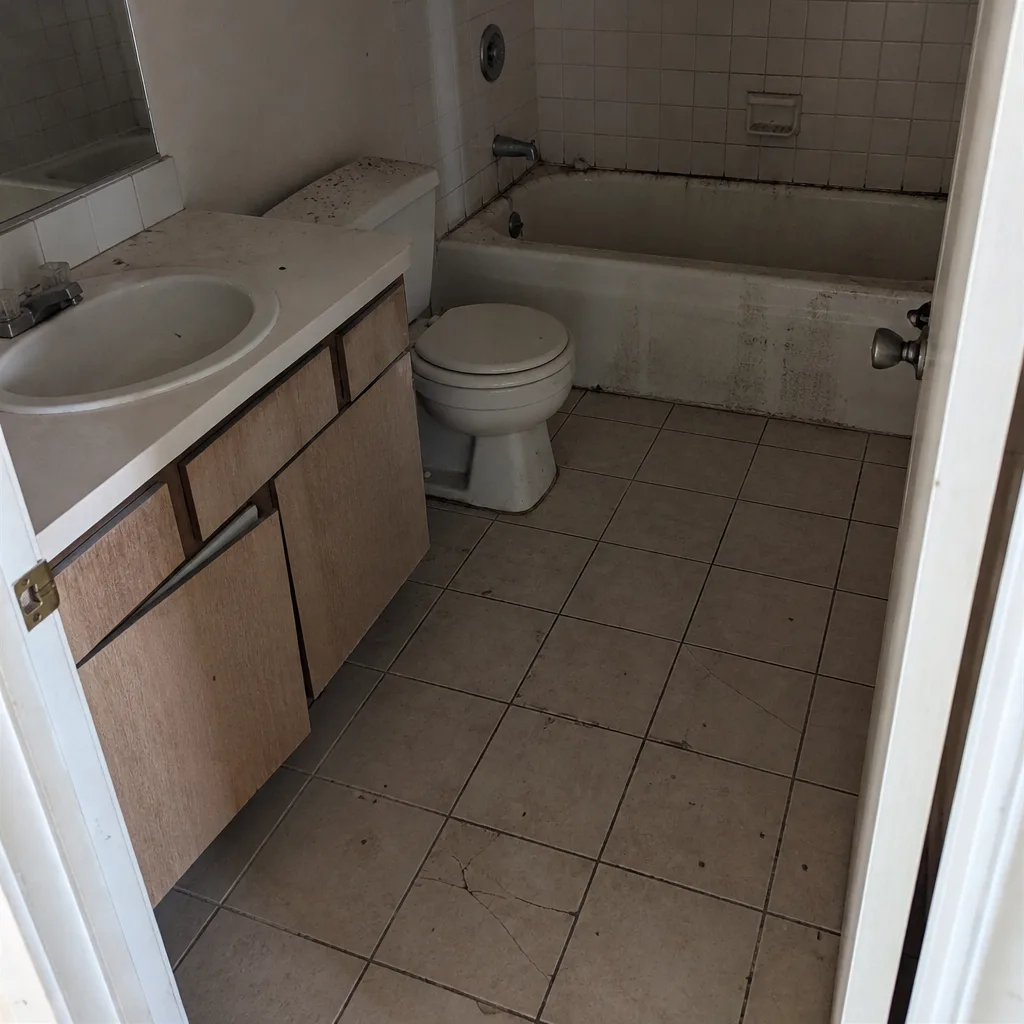 Before
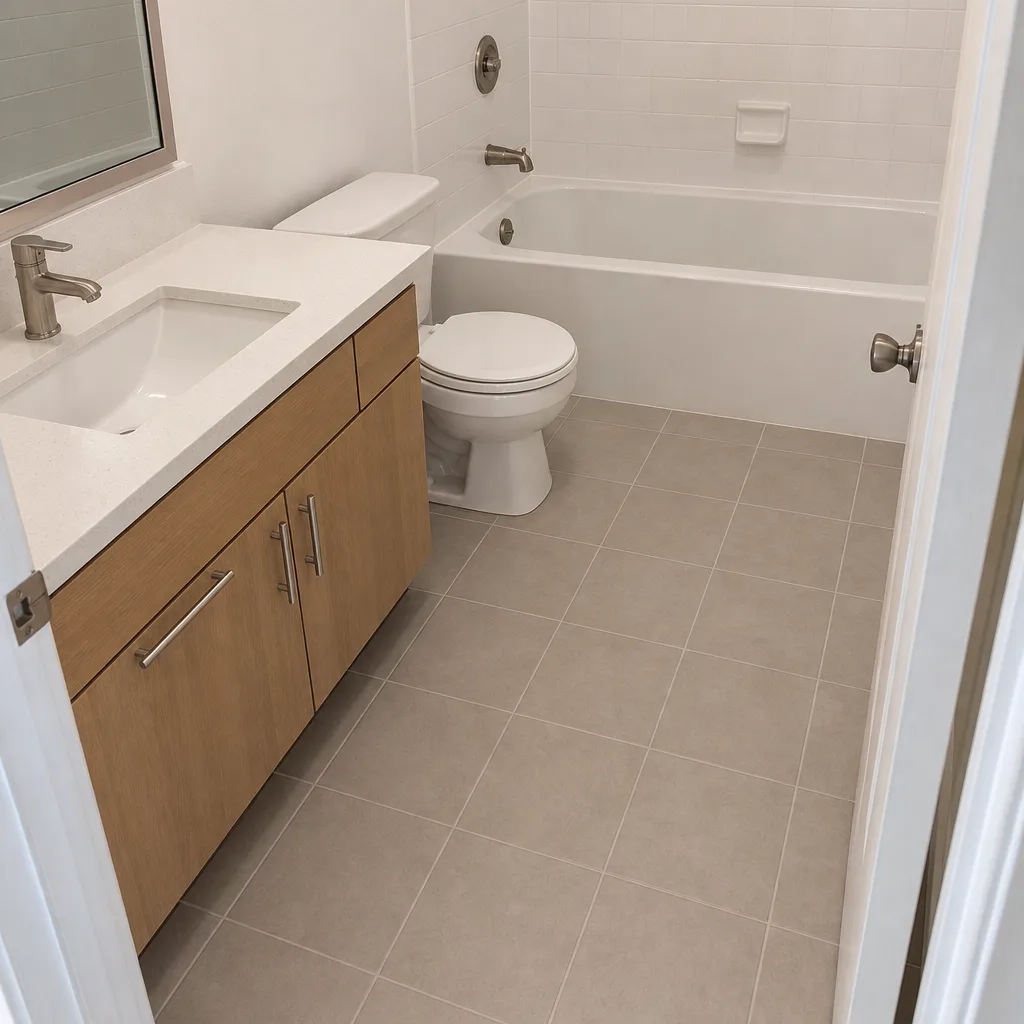 After
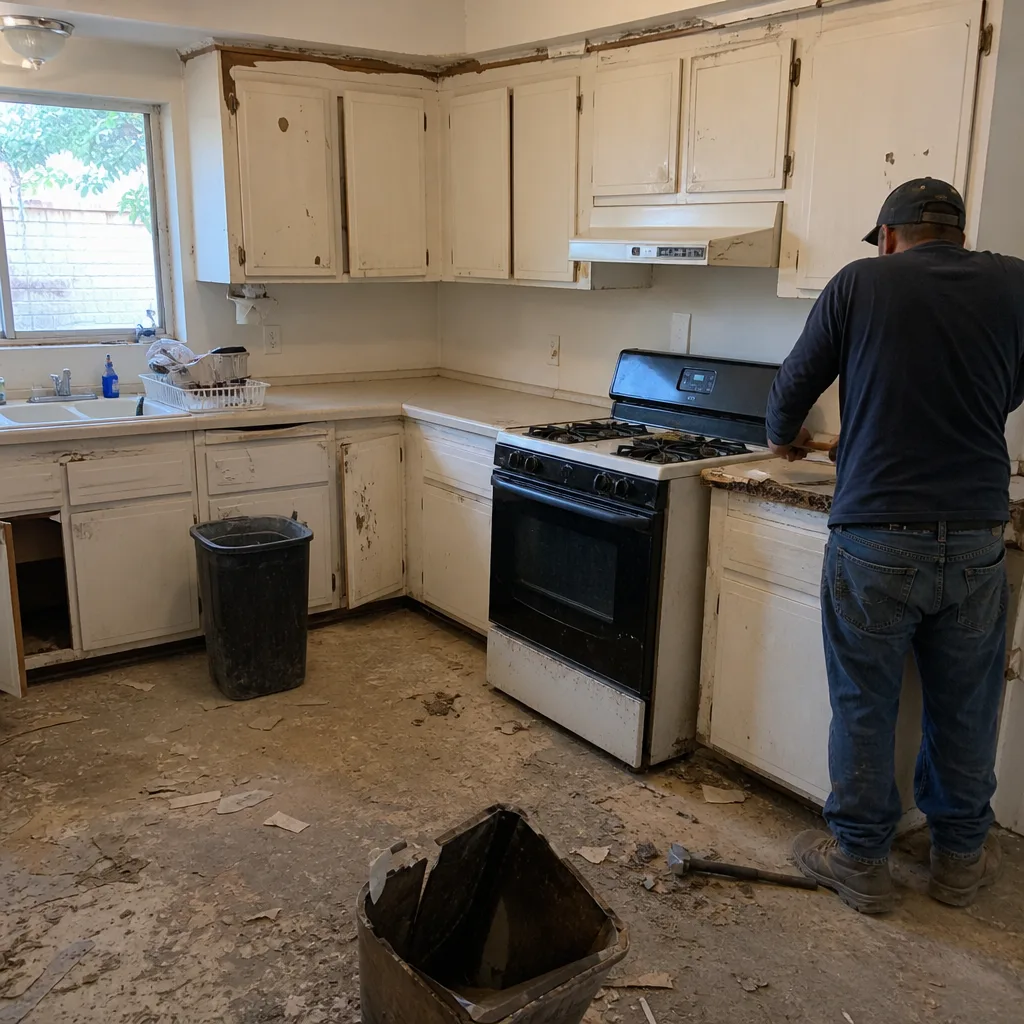 Before
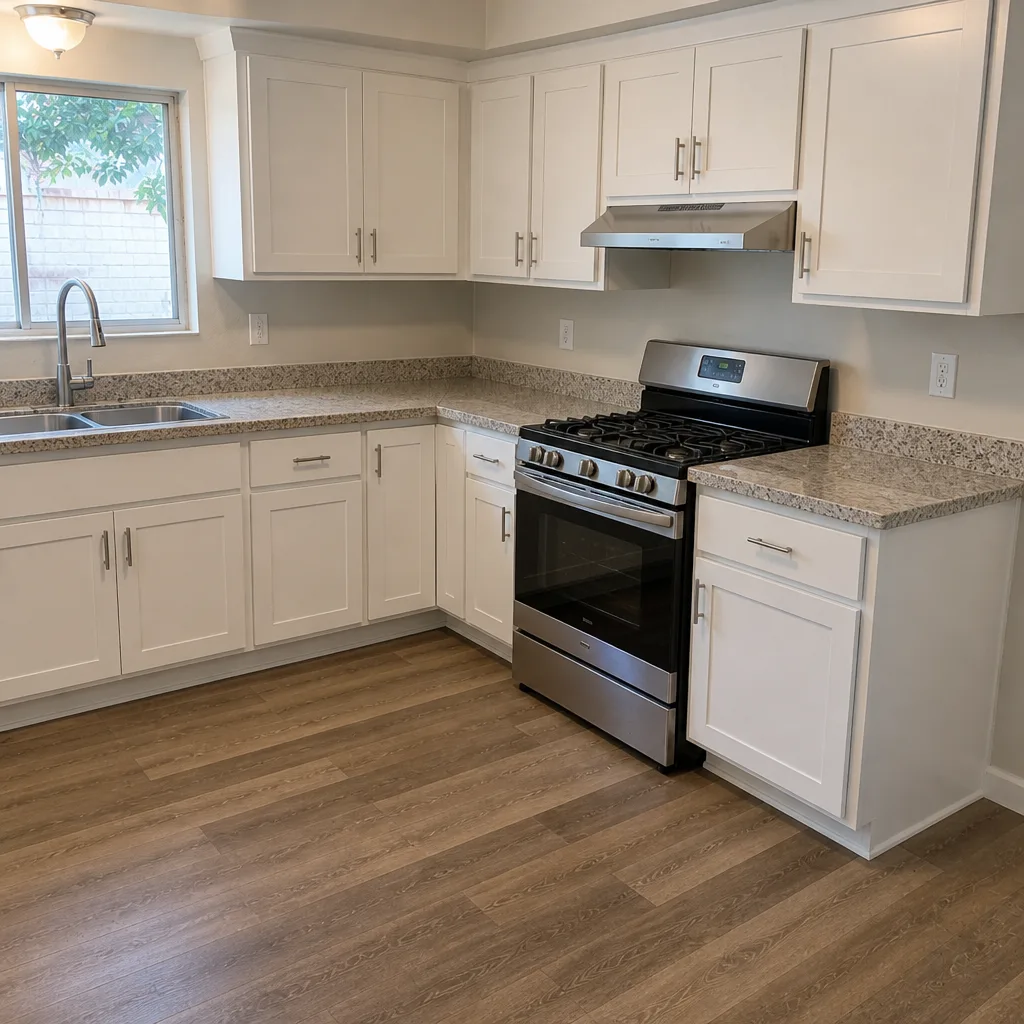 After
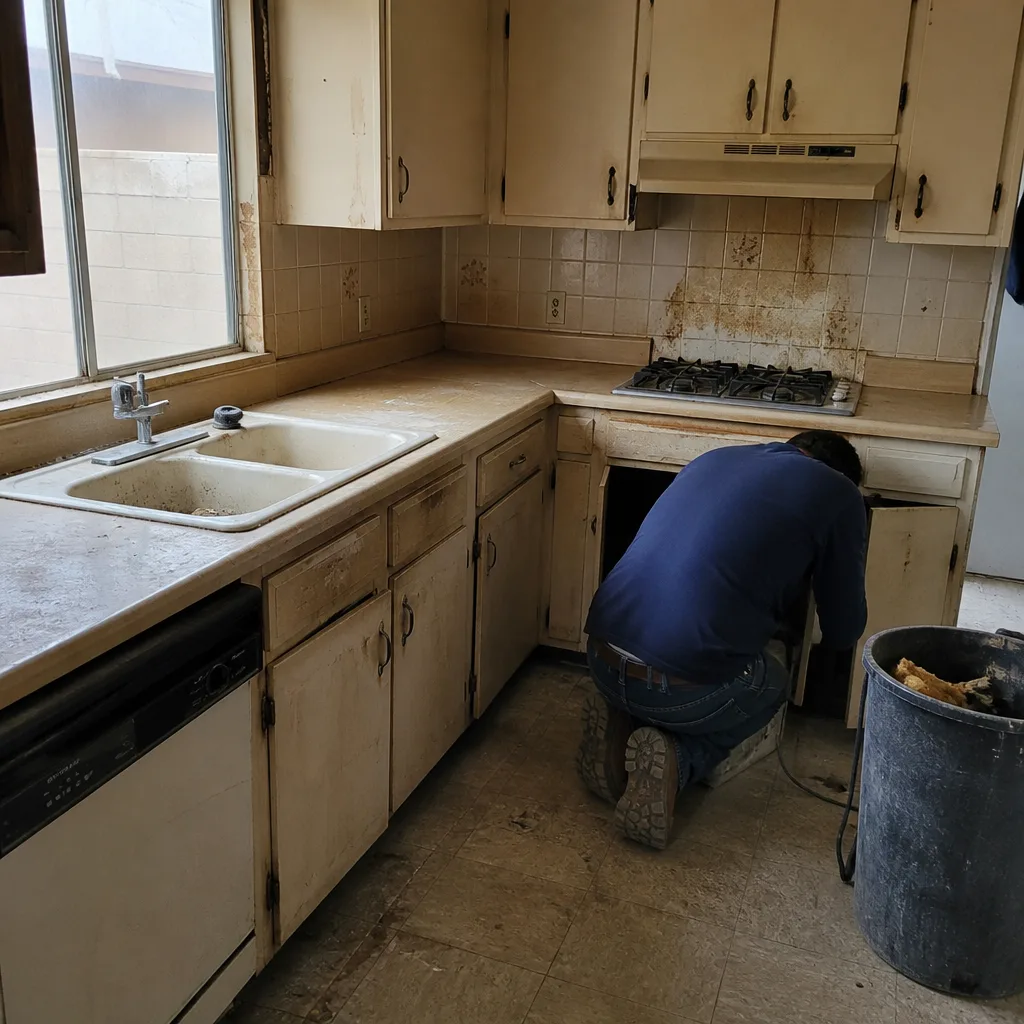 Before
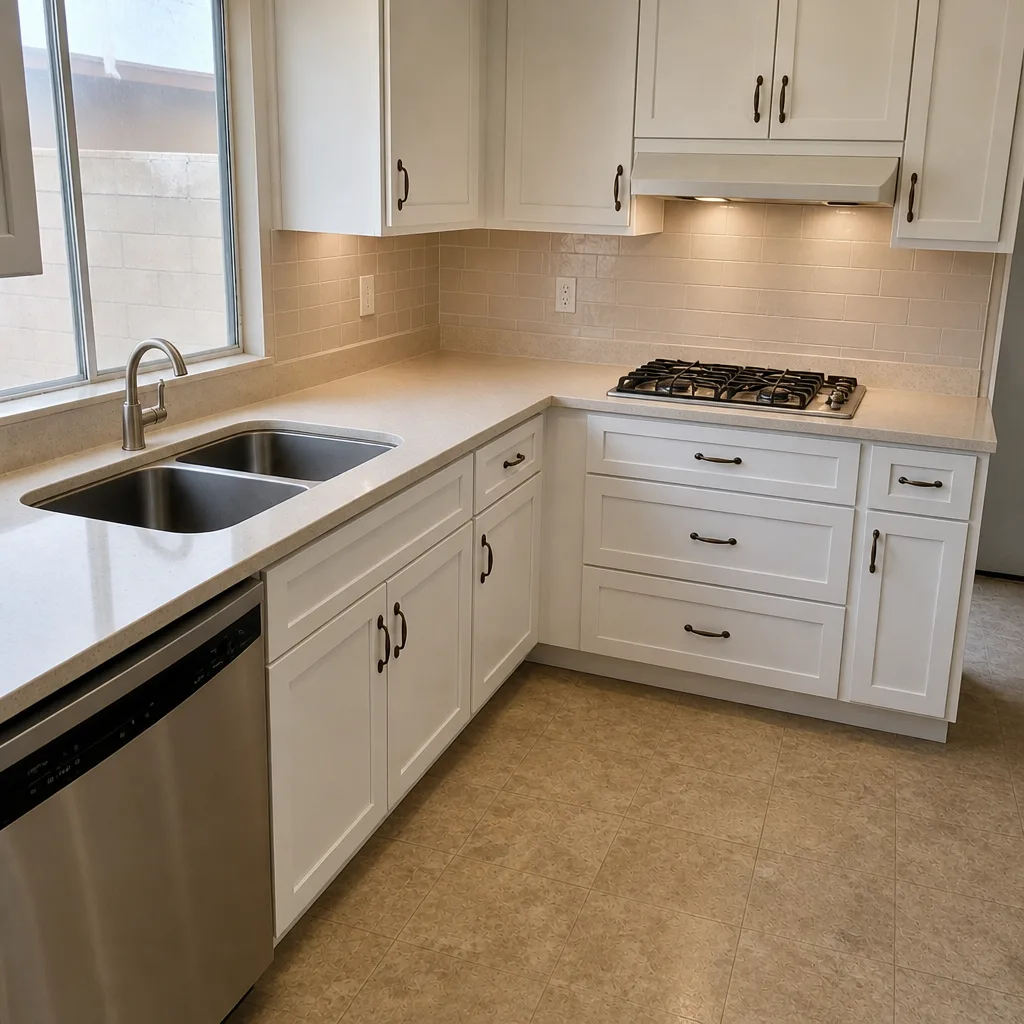 After
When to Call a Professional
Some problems are DIY-friendly (a loose cabinet hinge, a non-functioning light switch). Others genuinely need a trained professional – and pretending otherwise can make a small problem expensive.
Call a licensed professional when: there’s active water intrusion into drywall, floor, or ceiling cavity; any electrical circuit shows signs of overheating, scorching, or repeated breaker trips; there’s a structural crack wider than a hairline or any sagging in a floor or ceiling; a gas appliance connection isn’t functioning properly; the work involves a permit (which it usually does in Henderson for anything beyond paint and simple fixtures); or a previous contractor’s work has failed within its warranty period and you need a written assessment of the defect to proceed with a claim.
If the work involves a high-tension garage door spring, an electrical panel swap, a gas line, or any roof work at height, that’s not a homeowner task – those are the components most likely to seriously injure someone who tries. Call a professional, and get the work documented.
Mason Remodeling Co Henderson offers free estimates in Henderson – call (888) 325-9386 to walk through what you’re seeing and get a written opinion, warranty review, or quote before you commit to a repair path.
Frequently Asked Questions

Look at the pattern. If the failure follows how the product was installed – one wet corner, one unlevel cabinet run, water damage in a specific spot – it’s likely workmanship. If the failure appears in one unit of many, or shows up across multiple brands on the same job in identical form, it’s likely a material defect. Document both scenarios with photos before calling either party, and get a written opinion from a second licensed contractor if you’re uncertain.
Send one written email requesting a status update on the specific next milestone, then wait 48 hours. If there’s no response, send a second note stating you’ll consider the contract at risk of default in 5 business days, and photograph the site as-is. If 5 business days pass with no contact and no work, you have grounds for an NSCB complaint. File it promptly, since homeowners who file quickly recover more than those who wait. Call (888) 325-9386 if you want a second professional to assess the state of the work before you file.
No – the preliminary notice is not an invoice. It’s a legal heads-up that the sub or supplier has lien rights if they don’t get paid by your GC. You pay your GC per the contract; the notice just tells you who might file a lien. Keep every notice you receive in a dedicated file, and don’t pay a sub directly unless you have a written agreement with your GC that you’ll do so.
Yes, on the specific invoice for the disputed work – but not on unrelated payments already due for completed, accepted work. Send written notice of the specific defect, the resolution you want, and the deadline, and hold only the disputed amount. Holding the entire project payment over one small defect can trigger a legitimate contractor claim. Document the defect carefully and put the hold in writing.
It’s murky, and it depends on what’s covered by the original contract and what evidence exists. In practice, verbal change orders are enforceable when there’s proof the work happened and the homeowner agreed – and disputed when the homeowner says “I never approved that price.” Save yourself the argument: get every change in writing, with the price on it, before the work starts. Even an email confirming the scope and price is far stronger than a hallway conversation.
It should state a specific time period in months or days from the completion date, list what’s covered and what’s excluded, name the remedy (repair, replace, or refund), and describe how to make a claim. A one-line “backed by our warranty” statement is not a warranty. Ask for the written document before you sign the contract. Our own guarantee runs 365 days from completion, with a free return visit if a repair or installation fails – and every one of those terms is in writing before work starts.
The Bottom Line
Most general contractor disputes aren’t about bad construction – they’re about unclear communication that hardens into a fight. Diagnose the problem before you accuse anyone: workmanship, material, or miscommunication. Build your paper trail in the first 48 hours, keep every preliminary notice, hold final payment until you have lien waivers, and use the NSCB complaint portal as a strategic escalation, not a first move. Good written practices prevent most of this. And when you do hire a crew, insist on the things that actually protect you: a written price before work starts, a written warranty with specific terms, verified crew arriving with a name and photo on file, and a phone number answered by a live person. In Henderson, that combination is worth more than a rock-bottom quote – and it’s what we build into every project.
Written by the team at Mason Remodeling Co Henderson.